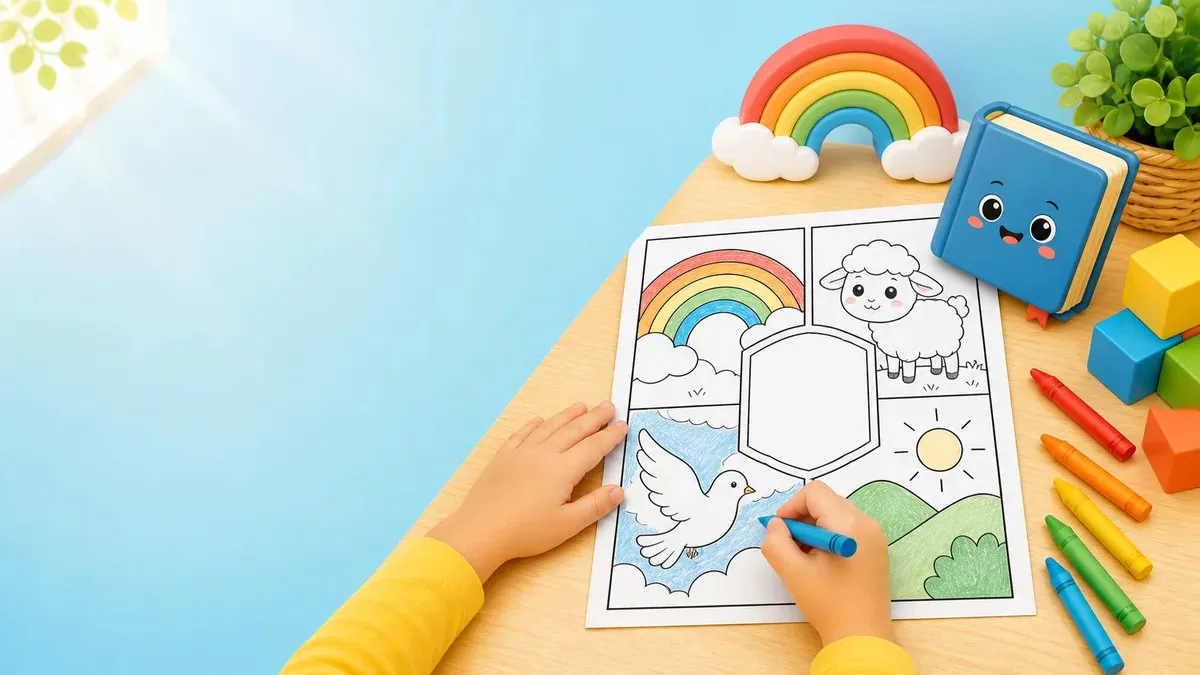
You do not need a complicated lesson plan. A Bible, a few crayons, paper, and a simple activity can give your child a focused learning moment at home, in preschool, or during Sunday school.
These 10 Bible activities for preschoolers combine early literacy with familiar Bible words and stories. Choose one activity for the day, or build a short weekly routine around a letter and a Bible theme.
1. Make a Bible Alphabet Letter of the Day
Choose one letter and connect it with a Bible word. For example:
- A is for Ark
- B is for Bible
- C is for Cross
- D is for Dove
- L is for Lamb
- R is for Rainbow
Show the child the uppercase and lowercase versions of the letter. Say the letter sound, say the Bible word, and ask the child to repeat both. Keep the conversation short and clear.
You can finish the activity by asking, “What else begins with this sound?” Accept simple answers, even if the word does not relate to the Bible theme. The goal is to help the child notice the connection between letters and spoken words.
2. Color a Bible-Themed Letter Page
Coloring gives preschoolers a calm way to revisit a word after hearing it. Choose a page with one large letter and one simple Bible illustration. Encourage your child to name the letter and picture before picking up a crayon.
Look for pages with thick outlines and large spaces. Small details can frustrate young children, while clear shapes let them practice staying inside the lines without turning the activity into a test.
3. Trace the Letter Before Coloring
Letter tracing works best when children understand that the marks form a letter. Start by pointing to the uppercase letter. Trace it with your finger, then invite your child to follow the dotted path with a crayon or pencil.
After the uppercase letter, show the lowercase version. You can say, “This is the big A. This is the little a.” Use the same language each time so the contrast becomes familiar.
Stay nearby and offer guidance when needed. Preschoolers are still developing hand strength and control, so a few careful attempts are enough for one sitting.
4. Tell a Short Bible Story With Letter Cards
Write or print three to five letters on separate cards. Choose letters that connect to a short Bible story. For Noah’s Ark, you might use A for Ark, N for Noah, R for Rainbow, and D for Dove.
Place the cards on the floor and tell a simple version of the story. When you say one of the words, let the child find the matching letter card. This turns listening into an active search game.
Keep the story age-appropriate. Preschoolers need a clear beginning, a few memorable details, and a positive closing idea. You can save longer story discussions for another time.
5. Play “Find the Letter” With Bible Pictures
Place several Bible-themed pictures on a table. Add one large letter card beside each picture. Ask your child to find the letter that matches a word you say.
For example, place a lamb beside L, a fish beside F, and a rainbow beside R. Then say, “Can you find the picture that starts with L?” Let your child point first, then say the word together.
This activity supports visual matching and sound awareness. It also gives children a reason to look closely at each picture.
6. Build Words With Magnetic Letters
Use magnetic letters, foam letters, or letter tiles to build short Bible words. Start with words that have clear sounds and familiar pictures, such as fish, lamb, dove, or ark.
Say the word slowly. Touch each letter as you say its sound. Then blend the sounds together and point to the matching picture.
Preschoolers do not need to read the whole word independently. The activity introduces the idea that letters work together to make a word.
7. Create a Bible Story Collage
Give your child a sheet of paper, crayons, child-safe glue, and simple paper shapes. Invite them to create a collage based on a Bible word or story.
For an Ark activity, children might glue a boat shape, clouds, raindrops, and animal shapes onto the page. For a Rainbow activity, they can add curved paper strips or draw each band with a crayon.
Write the target letter at the top of the page. If your child wants to decorate the letter, let the art become part of the letter practice.
8. Sort Uppercase and Lowercase Letters
Write several uppercase and lowercase letters on cards. Mix them together, then ask your child to match the big letter with the little letter.
Begin with two or three pairs. Add more only when the task feels manageable. You can place a Bible picture beside each pair to make the activity more meaningful, such as B beside a Bible or L beside a lamb.
Praise the process instead of correcting every mistake. A simple prompt such as “Look at the shape again” gives the child a chance to try without pressure.
9. Use Bible Words During Story Time
Choose one Bible word from the story you plan to read. Before opening the book, show the first letter and say the word together. After the story, ask your child to listen for that word or look for the matching picture.
For example, use R for rainbow before reading about Noah. After the story, ask what the rainbow reminded Noah’s family of. Keep the answer brief and use language your child understands.
This routine connects the printed letter, spoken word, picture, and Bible story in one small lesson.
10. Make a Simple Letter-and-Color Review Game
Choose three letters from the week. Draw each letter on a separate sheet of paper and place a few crayons beside them. Call out a letter and a color, then invite your child to decorate that letter.
You can add a Bible picture below each letter. Try A with an ark, D with a dove, or S with a shepherd. At the end, ask your child to point to each letter and name the picture.
The review should feel like play. Stop while your child is still interested rather than stretching the activity until attention fades.
How to Keep Bible Activities Enjoyable for Preschoolers
Short activities usually work better than long worksheets. Give your child one clear task at a time, use large materials, and allow movement between activities. Some children will want to color quietly. Others will want to talk through every picture. Both approaches can support learning.
A helpful routine looks like this:
1. Introduce one Bible word. 2. Show the uppercase and lowercase letter. 3. Tell a short story or ask one simple question. 4. Let your child trace, color, sort, or build. 5. End with a quick review.
You can repeat the same structure with a new letter each week. Repetition helps children recognize the activity pattern while the Bible word and picture keep the lesson fresh.
A Printable Way to Practice the Bible Alphabet
If you want a ready-made set of pages, the "A–Z Bible Alphabet Coloring Book for Toddlers Ages 2–4" combines letter recognition, Bible vocabulary, coloring, and dotted tracing in one printable resource. It includes 26 individual pages, a combined PDF, and Bible-themed illustrations for each letter.
Get the A–Z Bible Alphabet Coloring Book for Toddlers Ages 2–4
Use the pages at home, in a preschool setting, during homeschool time, or as part of a Sunday school activity. Print one page at a time when you want a short lesson, or work through the alphabet over several weeks.
Final Thought
Bible activities for preschoolers work best when they give children something concrete to do. A letter card, a coloring page, a picture, or a short story can turn a few minutes into a meaningful learning routine.
Start with one letter your child already recognizes. Add a Bible word, a simple question, and a hands-on activity. Over time, those small moments can help children grow more comfortable with letters while building positive memories around Bible learning.
![Free Counting Ocean Animals Pages [Numbers 1, 2, 3 for Toddlers]](/uploads/thumbs/597090274eb9db138ab3d03a2296ea7b-420.webp)
![Free Space Alphabet Coloring Pages for Toddlers [A, B, C Sample Pages]](/uploads/thumbs/14976df85be5062759d6acf101c72053-420.webp)
