
Your Toddler Will Learn Their ABCs — Promise
It's one of the most common fears among parents of 2- and 3-year-olds: "Should my toddler know their letters by now?" The short answer is: probably not — and that's perfectly okay.
Most children begin recognizing letters between ages 3 and 4, and many don't master the alphabet until kindergarten. But that doesn't mean you can't gently introduce letters in ways that feel natural, playful, and pressure-free.
Here's how to teach your toddler the alphabet without turning your home into a classroom.
1. Start with What They Love
The secret to teaching toddlers anything: connect it to something they already care about. If your child loves animals, an Animal ABC Coloring Book turns letter learning into a safari adventure — each page introduces a new animal alongside its starting letter.
Love dinosaurs? Try our Dinosaur Alphabet Book. Love space? The Space Alphabet Book is a blast-off hit. When the theme matches their passion, letter recognition happens almost by accident.
2. Sing the Alphabet Song — Really
It's a classic for a reason. The alphabet song combines melody, rhythm, and repetition — three things toddler brains are wired to absorb. Sing it in the car, during bath time, or while getting dressed. Don't worry about perfection; your toddler is absorbing the sequence and sounds of letters through exposure.
Pro tip: Slow down the "L-M-N-O-P" part. Most toddlers trip over it because adults rush through it. Sing it at a snail's pace and watch them pick it up faster.
3. Point Out Letters in the Wild
Letters are everywhere — on cereal boxes, street signs, storefronts, and books. Make a game of spotting them. "I see a big red 'S' on that stop sign! Can you find another 'S'?" This low-pressure approach teaches letter recognition in real-world contexts without flashcards or drills.
4. Use Printable Alphabet Coloring Pages
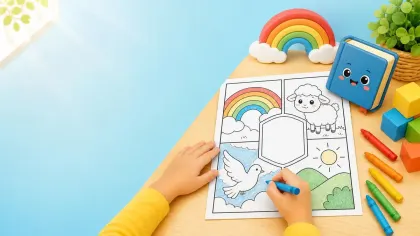
Coloring is one of the most effective ways to introduce letters because it engages multiple senses: sight (seeing the letter shape), touch (holding the crayon and tracing the letter), and even sound (if you talk about the letter while they color).
Our Toddler Alphabet Coloring Book includes all 26 letters with bubble letters to color, cute pictures, and tracing guides — all in one affordable printable pack. Browse our full printable alphabet coloring pages collection to find a theme your toddler will love.
5. Focus on the Letter Sound, Not the Name
When teaching the alphabet, many parents focus on letter names (A, B, C) before letter sounds (/a/, /b/, /k/). But research suggests that learning letter sounds first can make reading easier later. When you point to a "B," say "buh" instead of "bee." Your child will make the phonics connection sooner.
6. Read ABC Books Together
Alphabet books are a gentle, cozy way to introduce letters. Sit together, point to each letter, name the picture, and let your toddler turn the pages. There's no pressure to "learn" — just shared reading time that builds positive associations with letters.
7. Try Dot Marker Letters
Dot markers are an excellent alternative to crayons for toddlers who aren't ready for fine motor control. The satisfying press-and-dot motion lets them "color" letter shapes without needing precise hand control. Our ABC Dot Art Coloring Book is designed specifically for this — big letters made for dot markers.
8. Play "I Spy a Letter"
This simple game works anywhere: in the waiting room, at the grocery store, or during breakfast. "I spy with my little eye... the letter 'M'!" Your toddler scans the environment and finds it. It's a game, not a lesson, and it builds letter recognition skills effortlessly.
9. Trace Letters in Sand or Salt
Pour a thin layer of salt or sand onto a tray and show your toddler how to draw letters with their finger. This sensory activity is incredibly calming and builds muscle memory for letter shapes. Bonus: it's mess-free (mostly) and endlessly reusable.
10. Celebrate Small Wins
Your toddler recognized the letter "D" on their cereal box? Celebrate! They colored inside the "A" on their alphabet page? Cheer! Positive reinforcement builds confidence and makes learning fun. Avoid correcting mistakes harshly — a gentle "good try! That's actually a 'B' — see how it has two bumps?" is plenty.
What About Letter Tracing?
Letter tracing is a wonderful pre-writing activity, but only when your toddler is ready. If they can comfortably hold a crayon and make intentional marks, tracing dotted letters helps them learn the shape and direction of each letter. Our Animal ABC Coloring Book includes gentle tracing guides that feel like a natural extension of coloring, not homework.
Remember: No Pressure
Your toddler will learn the alphabet — in their own time, at their own pace. Some 2-year-olds can recite the whole ABC song. Others don't show interest until closer to 4. Both paths lead to the same place: a child who knows their letters.
The most important thing you can do is make the journey fun. Color together, sing together, and celebrate every tiny victory. That positive start is worth more than any worksheet.
👉 Explore our A-Z alphabet coloring books and make learning letters an adventure
![Free Counting Ocean Animals Pages [Numbers 1, 2, 3 for Toddlers]](/uploads/thumbs/597090274eb9db138ab3d03a2296ea7b-420.webp)
